So we have lived to see it. On Saturday, May 13 2023, students from Almadén, Antwerp, Augsburg and Sterzing met in Bratislava. After a short tour of the courtyard of Bratislava Castle, where they could enjoy an impressive view of the largest river in Slovakia, the largest housing estate in Central Europe, as well as the only proven UFO, they moved to the historic centre of the capital and then by a joint bus to Banská Bystrica, the scene of the last student mobility. After meeting the host families and pupils from the Moskovská 2 Primary School, everyone met in the most beautiful house on the square of Banská Bystrica, the Beniczky restaurant, for a festive dinner.
As a good custom in our project, Sunday belonged to the families and their guests. Students visited various places around Banská Bystrica, discovered the beauty of the underground world in the Cave of the Dead Bats, looked at Central Slovakia from the top of Zvolen, cheered on their Slovak classmates at a dance or basketball competition, flexed their muscles in the Jump Arena and some improved their aim, shooting skills and survival strategies in the Laser Arena. The saying «work first, fun later» is true in life, but it was the other way around for us. We know it was good this way because this is also one of the forms of cooperation and great preparation for the hard work in the field in the project activities.
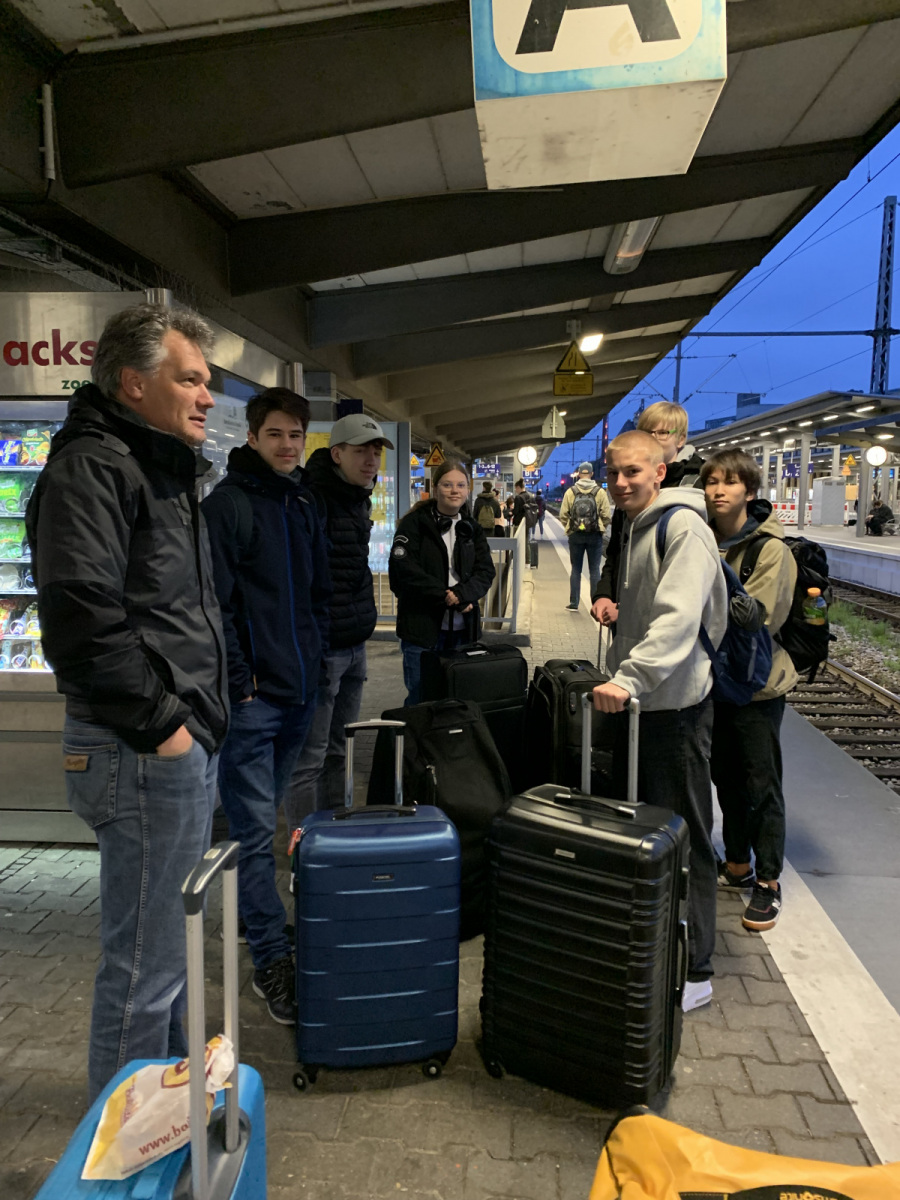
Leaving Augsburg for next Erasmus+ adventures
Image 1 De 42
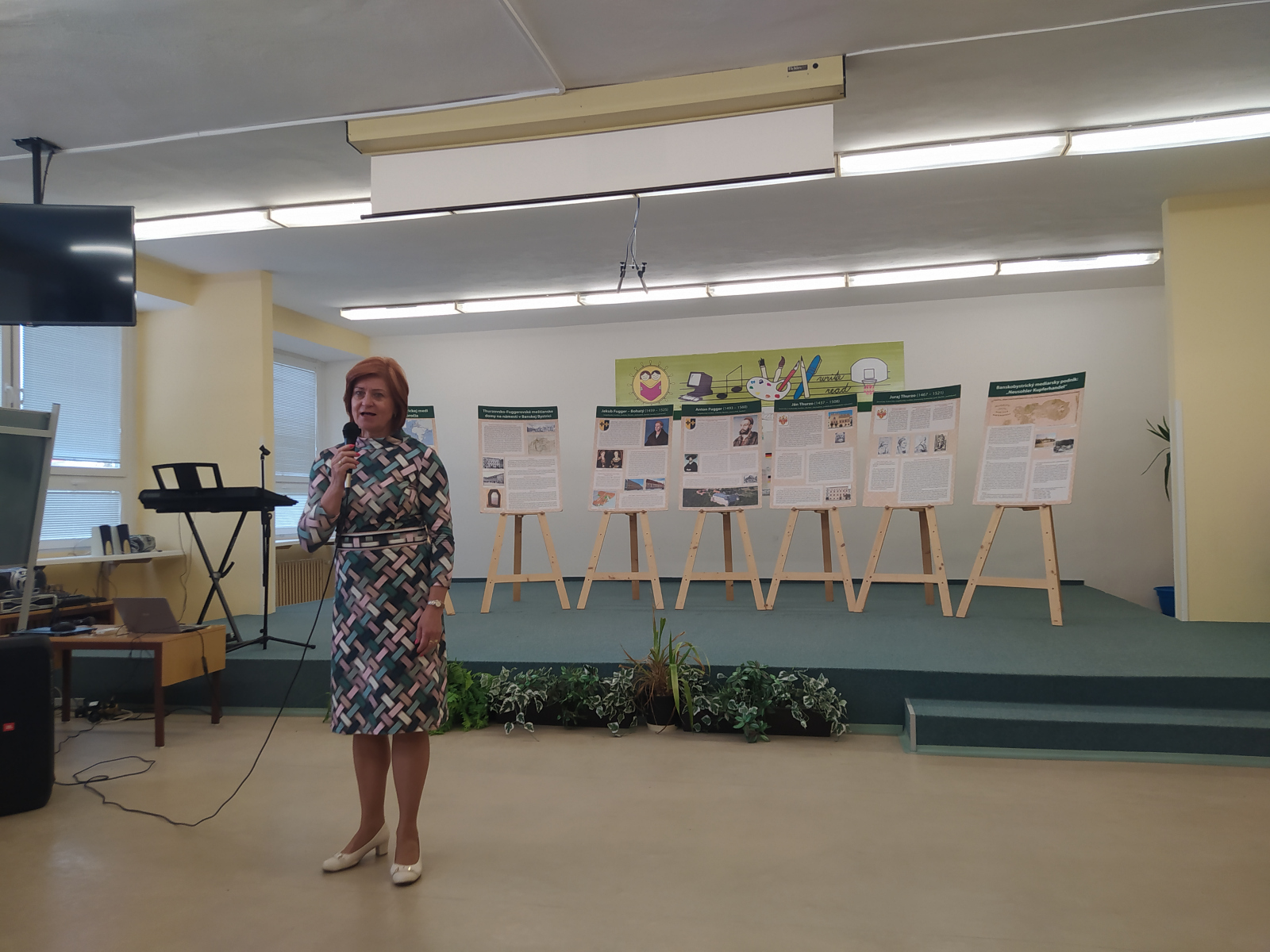
The mobility week began officially on Monday – with the reception of the foreign students and teachers at the host school, with an introductory word from the headmistress, who warmly welcomed everyone and wished the participants a time full of unforgettable moments and experiences.
After dividing the pupils into colourful working groups and brainstorming on the topic «What do I expect from this mobility?», the hosting students prepared a guided tour through the school for their project partners. They showed their classmates the rooms and classrooms where ordinary and extraordinary activities take place, leading to the gaining of new theoretical knowledge as well as practical skills. Other activities awaited the Erasmus students outdoors. Teachers and pupils alike moved from the school to the city centre where they learned about the city’s history with the help of a city game on the Actionbound app. During their wanderings, they got to know the monarch who granted Banská Bystrica the privilege of a free royal city, found the city coat of arms and the first baths, as well as the only sign associated with Jacob Fugger – a rose on the door of one of the churches. However, the mosaic of the historic pieces continued in the Thurzo-Fugger experiential exhibition guided by pupils from the Slovak Erasmus team. They focused their narrative on the history of copper mining and the existence of the Thurzo-Fugger Copper Company as the most important copper processor in the Middle Ages and the second longest-running enterprise in the territory of today’s Slovakia.
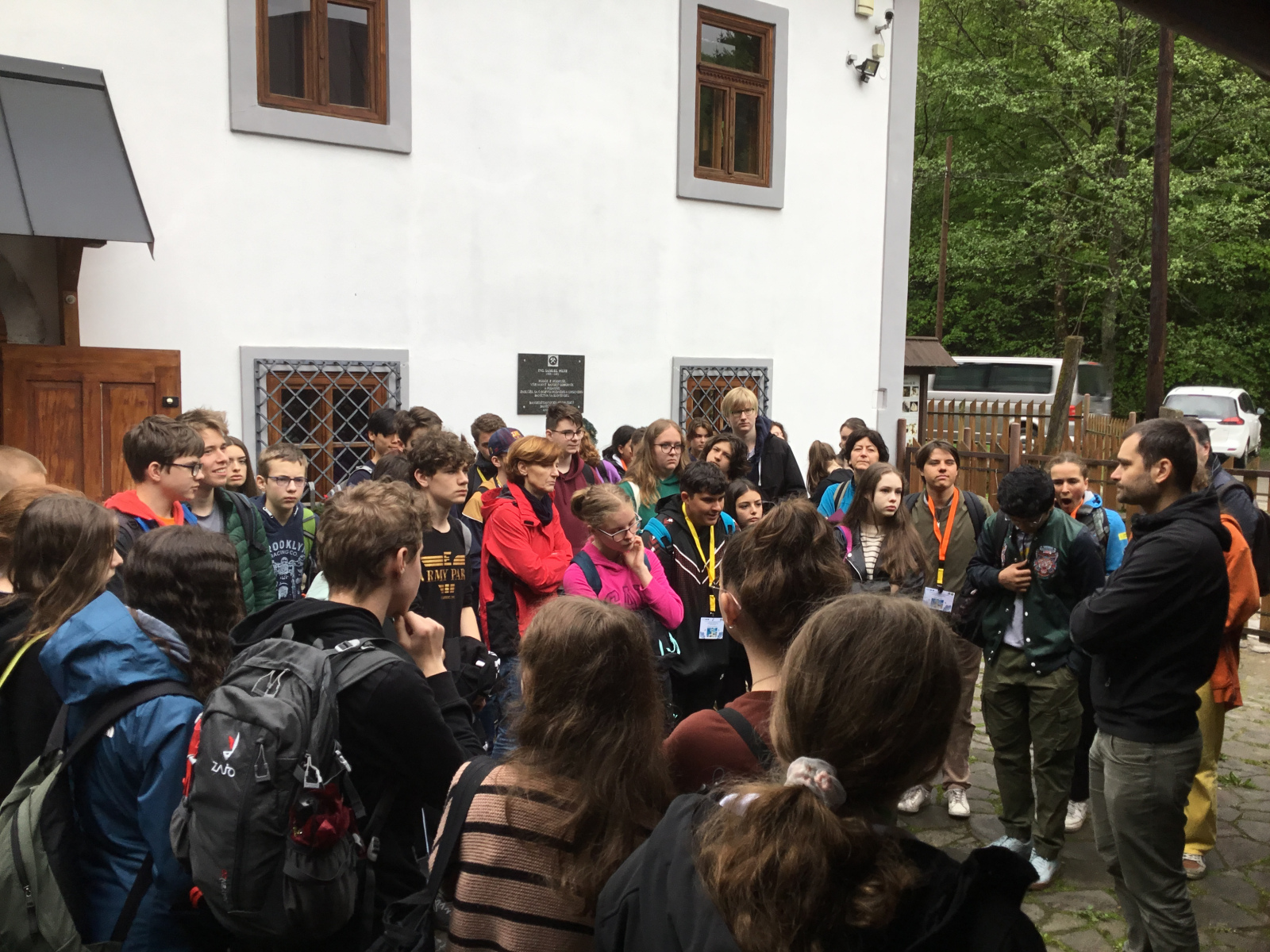
After lunch, the pupils went to Špania Dolina, the place with the oldest mention of copper mining in the region. After the visit to the Copper Museum, the pupils’ vocabulary was enriched with new terms such as cementing water, smeltering, copper hammer mill, Herrengrunder cups, etc. As this ball of theoretical information was only getting bigger, it had to be untangled practically. That was when the real «festival of science and research» could have begun. The Biology and Chemistry teachers prepared amazing worksheets for the pupils, aimed at discovering the secrets of mining waters, searching for traces of blue stones, as well as the consequences of copper mining on plants, soil and water. Some students tried to solve the mystery of the «miracle water» through experiments. They discovered that it was the metamorphosis of less valuable iron into more valuable copper by the action of the mine’s cementing waters. Others found a link between names such as Giovanni Bellini, Tintoretto, Raphael and the azurite or malachite in the form of green pigment that these masters used in their paintings. Using a modern method, they prepared synthetic malachite and learned that the former copper roofs in Banská Bystrica are now green thanks to malachite. The research activities continued at the Maximilián mine heap and by the lake below it. By studying the biodiversity of plants and looking for traces of life in the water flowing out of the mine heap, the students could observe how mining activities have affected nature, which is only slowly recovering. Theoretically and practically, they prepared for the next day’s activities marked by the project’s environmental footprint.
Headmistress of the Primary school Moskovská 2 officially launches the mobility week
Image 1 De 49
Our festival continued on Tuesday with a visit to the former free royal town of Ľubietová associated with mining and metallurgy since the earliest times. However, this activity has left its environmental traces in the surroundings, the exploration of which was the task of the Erasmus teams. A continuous green coating can be observed on the places where drainage water flows out, on the dead plant bodies alongside and on the bottom of the pond below the Podlipa heap field. Research activities aimed at observing the transformation of nails immersed in the cementation water in the pond and other parts of the mine water have confirmed the copper load in the surface waters.
Could the surface of Mars have something to do with Lubietova? It is hard to imagine, but it is not impossible. Mine heaps are an inhospitable environment, but despite this toxicity, «nature does not give up» and finds its way. Only the hardiest species have created unique plant communities, that cannot be found elsewhere. We were convinced of this by the research of another Erasmus group, which took aim at the biodiversity of the vegetation on the heaps and set out on the trail of unusually strong plant species that can survive even in toxic conditions.
Every small stream, even one tainted by environmental burdens, once it becomes part of a larger major river, can be a source of drinking water. The chemical composition and especially the presence of heavy metals can affect diversity and life. How microorganisms, invertebrates and vertebrates live in water that contains copper and whether they live in a community with algae were questions that another group of students sought to answer.
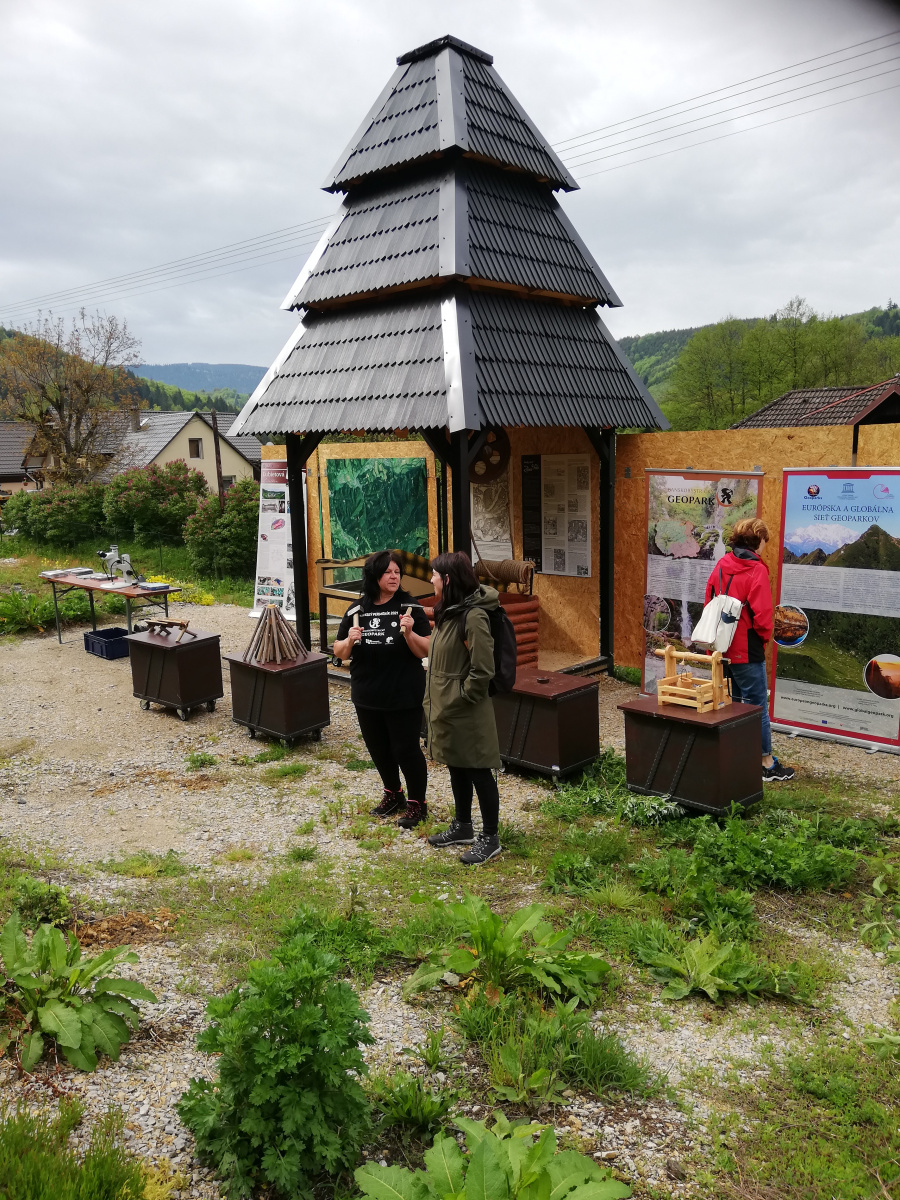
A very interesting part of Tuesday’s programme was a demonstration of historical copper smelting, prepared by OZ Libetha and the Banská Bystrica Geopark in cooperation with the Dráb family. The task of the last group of pupils was to gain as much information as possible about the copper smelting process from its preparation to the final product, which was, for example, a historical sword. This activity also left its environmental footprint on the landscape in the form of deforestation, as a huge amount of charcoal was necessary for the copper smelting. Recorded interviews with the smelters and historian Martin Kvietok offered students a wealth of information and answers to all their curious questions.
However, after the research spirit was sufficiently satiated, it was also necessary to refresh the body with a tasty goulash and to find a balance between mental and physical work. Therefore, the research teams rounded off the day with sporting activities at the bowling alley in Banská Bystrica.
Welcome to Ľubietová - the former free royal town
Image 1 De 39
Wednesday was marked by gold. On the agenda, was an excursion in Hodrusa-Hamre, where pupils could have panned their gold grains. With a guide and expert commentary, they could get to know the bowels of the local mine of the Old Saints and admire the beauty of minerals from all over the world in the museum exposition. The only active gold mine in the form of polymetallic ore in Central Europe is located in this village. The excursion also included a short visit to the tailings pond, which is used to deposit the sands produced during the flotation treatment of ores and the subsequent purification of wastewater by sedimentation of the waste sands.
In the afternoon, the pupils moved to the silver Banská Štiavnica, whose history they could get to know interactively with the help of a prepared Kahoot quiz. They found the answers to the quiz questions on a relief in the centre of the town. As the initial brainstorming session asked for «love stories», the next task of the foreign pupils was to learn one verse from Andrej Sládkovič’s longest love poem «Marína» and to capture this moment on video. You can see that the pupils did it perfectly in our video gallery. And the end of the day belonged to the «Journey in Time», an experiential exhibition where you can be transported to the life of the city in the 18th century with the help of modern technology – virtual reality, holograms, touch screens. That represents the world of today’s youth and all lovers of new technologies. It is no wonder that it was difficult to get the pupils out of this exposition.
Hodruša-Hámre - exploring the depths
Image 1 De 43
Exploration of the project’s environmental footprint continued on Thursday morning. After an official reception by the second vice-mayor, Mr Martin Majling, in the historic town hall, guests were welcomed by the company ZEDKO, whose main objective is the long-term protection of the environment through the recycling of electrical waste, the refining of precious metals and their further use in industry. We already know how metals are mined, where and how they are used, and what mining entails. We also know that our Earth does not have inexhaustible resources. It is, therefore, necessary to actively address the topic of sustainability.
Thursday afternoon was dedicated to the sport to keep everyone in good shape. Activities such as an emotional parachute aimed at student cooperation, a balloon battle, rhythmic-musical activities and a basketball tournament between the five countries offered everyone quality time together and an excellent alternative to research work.
Official reception in the historical town hall
Image 1 De 31
On Friday, we had the opportunity to welcome Mr Richard Kaňa, whom the pupils met while panning for gold. In a recorded podcast he talked about his life as a miner, the history and future of this industry. The pupils prepared the questions as a part of their homework before the mobility. The final day was mainly a day for pupils to work on improving skills such as teamwork, working with collected information, photographic and video material, and samples, evaluating observations and experiments, preparing and presenting the results of group work, as well as presenting homework for each country. And they did it to perfection. After working together for two hours, the teams summarised all the research activities and the results of their work in their presentations, and prepared 2D models and pictorial materials, thus concluding the science and research festival.
Erasmus mobilities are about experiences, new friendships, but above all about travelling around Europe, which unluckily leaves a footprint – a carbon footprint. Recognising that this also needs to be offset, one of the tasks for each country was to calculate their travel carbon footprint and the number of trees that need to be planted to offset it in some way. The pupils’ presentations showed a lot of well-done work, data, mathematical calculations and, finally, trees. However, it was not all about numbers, so we symbolically planted an Erasmus tree in the school garden to remind us of our commitment to the environment. And how many do we need to grow? Around 1 500 in total. Some schools have already started, and others are still planning this activity for the autumn, which is the best time to plant trees.
At the end of the mobility week, there was a Fugger Forum, during which student presentations on the traces of Jacob Fugger in individual countries and two lectures by experts from the host country were live-streamed. The first one was from Doc. Stanislav Jeleň. The attendees learned about the environmental burdens of mining heaps, specifically in Ľubietová. Since the pupils personally explored this site on Tuesday, it was easy for them to penetrate the secrets of all the presented chemical formulas and data. Mr. JUDr. Martin Kvietok interestingly presented Jakub Fugger from the perspective of today’s modern world – what he and his society would be like if he lived in the 21st century.
Discovering new talents
Image 46 De 52
The circle has come full circle. Not only symbolically. The presentation of the Slovak traces of the project protagonist, among other things, raised the question of whether Jakub Fugger had ever been to Banská Bystrica and personally met his business partner Ján Thurzo. Until recently, no tangible evidence of this has been published. Until Friday, May 20, 2023, when our school received a unique gift from the project coordinator Jörg Haas – a copy of an archival document from the Fugger Archive from Dillingen (Germany), which confirms the personal meeting of these two gentlemen on the city’s soil in 1507. A wonderful surprise for the students and teachers but also for our honoured guests, and the project partners. That is what Erasmus is all about. It changes people and opens up new horizons, new possibilities. We were very grateful to have been part of it. And together we celebrated it during the final mega party in the school canteen with delicious catering from the kitchens of all the participating pupils’ parents. Thank you, we could not have done it without you.